Tying the Gartside Soft Hackle Streamer

December 17th, 2011 by MikeQ

I think if Jack were still alive he would be making a lot of tying videos. It was something we talked about and I wish we’d done more of it. I was reminded o this today when I was talking on the phone with a tyer from Wisconsin, describing one of Jack’s signature patterns, the Soft Hackle Streamer. It’s a fly that is at once very simple and amazingly effective. It can and has caught just about anything, from bonefish to catfish to tarpon to carp.

In the course of our conversation I was describing the blood marabou you need to tie the pattern  correctly. The tyer hadn’t heard of blood marabou and it took me a little to explain how it differs from standard quill. When I got off the phone I wondered if anyone had made a video of its tying steps. So I did a quick internet search. And the answer was yes. Several.

Now one of the great things about the Soft Hackle Streamer is how adaptable to change it is. So not surprisingly, of the videos I found, no two tied it exactly the same. And none of them tied it quite in the way Jack did (granting that Jack himself tied it in a variety of styles).

The video below, from Joe Cornwall of Ohio, is very good (no comment on the opening music, tho  ;-) ). If you’ve never tied the fly before, it’s well worth a watch, as is one by Jim Misiura. Joe does a good job emphasizing some of the things critical to understanding the pattern: its ‘breathability”; the importance of using blood marabou; the method of winding the marabou as hackle; and the importance of combing out the fly (Jack used a fly or eyelash comb rather than a tooth brush).

There also are a few differences worth noting between how Jack tied the fly and how Joe ties it:

  • Jack did not to my knowledge ever tie the pattern on short-shank hooks, usually using a Mustad 9671 or equivalent. (When tying Soft Hackle Streamers for tarpon, he used long-shank hooks, tying the fly on the rear third of the shank and leaving the front two-thirds bare. This protects it some from the tarpon’s sandpaper mouth.)
  • Jack tied the pattern with a collar, usually of folded wood duck flank. (On his New Wave Soft Hackle Streamer he used the lower, downy end of a grizzly saddle feather). He believed the collar served a very important function: it helps the head maintain a consistent shape. Specifically, it helps prevent the marabou from “jelly-fishing” forward during pauses in your retrieve.


Still stripers to be had!

October 27th, 2011 by MikeQ

For those of you in or around Boston, there are still lots of fish around, including some big ones! I’ve seen blitzes this week along Revere Beach, Nahant’s Short Beach, and the Lynn/Swampscott shoreline–all within wading range. Sunday night I gave a ride “home” to some friends temporarily moored in Salem Harbor. Their dingy was at a marina near the power plant and wow was there a ton of bait there. And stripers feeding on them. So much bait scattering it was like a rainstorm. I think I’m going to need to spend more time exploring the Salem waterfront next season.

Tonight’s snow and frigid temperatures are a sign of things to come but I don’t think are enough to push the fish out. So if you have the time and inclination, get out there!


Old friends, articles, and other updates

October 12th, 2011 by MikeQ

After a summer immersed in activity, the fall offers a time of respite, a chance to catch your breath, reflect on what’s been, and catch up with old friends, even as you’re marking the days down to winter.

On the old friends score, I met up with Gartside cohorts Dale Linder, Mel Harris, and Tom Kennedy for dinner one evening last week. We even got in a little fishing afterwards (see Tom in picture). Dave Skok, another local Gartsider of repute, could not be there as he’s gone for the month, fishing the Martha’s Vineyard Striped Bass and Bluefish Derby as he does every year. A couple days later Dale and I cruised the Seatoad along Revere Beach looking for fish. Didn’t find any but it was a beautiful, warm, sunny fall afternoon and great to be out on the water.

Be sure to check out Stuart Patterson’s article on the Gartside Gurgler in this month’s online edition of Florida Fly Fishing Magazine. You may recognize  some of the material that was reproduced from jackgartside.com and from Jack’s book Scratching the Surface. Another old friend, Masahito Sato, is also working on an article on Jack. I’ll post a link when I know when and where it’s going to appear.

Last spring long time Gartsider Iain Sorrel launched Saxon Tackle. Saxon produces and sells rods and other tackle for the emerging carp fishing market (emerging applies to the US…in Europe carp fishing has been an obsession for a long time now). If you’re interested in carp fishing, or have friends who are, you’ll find some great information on Saxon Tackle’s web site.


Striped bass and mycobacteriosis

March 16th, 2011 by MikeQ

Received this message from our good friend Ed Mitchell about a disease ravaging striped bass populations in the Chesapeake Bay. Frightening stuff. Please read:

Mike, Stripers Forever has started a drive to raise money for mycobacteriosis research. With 75 percent of the bass in the Bay now infected, myco poses a huge threat to the future of fishery. I’ve attached our press release and a brief document from the lead research guy at the Virigina Institute for Marine Science. Could you please make your angling friends aware of this drive? Its a worthy cause…tax deductable too.


FUNDING INITIATIVE FOR RESEARCH ON DEADLY STRIPED BASS DISEASE

Stripers Forever, the conservation organization advocating for responsible stewardship of wild striped bass along the Atlantic Coast, has announced an outreach initiative to raise money for research on mycobacteriosis, a deadly fish disease that is increasingly prevalent in the Chesapeake Bay where the bulk of stripers that migrate up and down the Atlantic Coast are spawned. “Myco” is believed to be nearly always fatal to infected striped bass and can create serious health problems for anglers and anyone else handling those fish before they are cooked. Fishery scientists estimate that more than 75 percent of all striped bass in the Chesapeake Bay system are infected with myco.There is at present no known cure for this insidious disease which represents a major threat to the well-being of stripers and thus the future of recreational and commercial striped bass fishing from Maine to North Carolina.

The fund raising appeal being administered by Stripers Forever is called The Mycobacteriosis Research Initiative (MRI). Donations to MRI will benefit Virginia Institute of Marine Science (VIMS), the leading authority on myco. Checks should be made payable to “VIMS Foundation” (write “For Myco Research” on the memo line) and mailed to VIMS Foundation, P.O. Box 1693, Williamsburg, VA 23187-8779. A link to a secure site for credit card donations appears along with more information about myco under featured links on the left side of the Stripers Forever home page (stripersforever.org). All contributions are tax deductible and will go into a dedicated myco research account. Visitors to the site can sign up for membership in Stripers Forever at no charge.

Here’s a fact sheet on mycobacteriosis


In memory of Dick Talleur

March 5th, 2011 by MikeQ

Dick Talleur passed away several weeka ago. Truly one of the nicest guys you could ever hope to meet, not to mention a fly tyer of legendary status. It was always a treat to visit Dick’s booth at the shows…you always got a smile and and a lot of good advice. Take care Dick.


Massachusetts Salt Water Fishing License

February 20th, 2011 by MikeQ

If you haven’t already heard, starting this year Massachusetts (along with every other US state bordering the ocean) will now require a fishing license for most salt water sport fishing situations. A summary of the pertinent details:

Who needs a license? Any angler 16 years or older fishing in state marine waters, including up to the first dam in rivers and streams that flow to the ocean. An individual license is not required if you are fishing on a permitted for hire boat (which should cover most or all guide/charter boats).

How much does the license cost? The cost is $10, for both residents and non-residents alike. The license is good for the calendar year. Note that anglers age 60 or older are required to have a license but are not charged for it.

Where can I buy a license? You can buy a license by mailing or filling out a paper application at a very limited number of state licensing offices. I expect most people will forgo that route and instead choose to buy one online .

Is my Massachusetts license good outside of Massachusetts? At this writing Massachusetts has reciprocal agreements with Connecticut, Rhode Island, and New Hampshire. A salt water license from any of these states can be used to fish in the other three.

More info here

Commentary to follow. 8-O


Bears Den Expo, February 19

February 17th, 2011 by MikeQ

For those of you in the New England area,  the Bear’s Den Fly Fishing Expo is coming up this Saturday, February 19, at the Holiday Inn in Taunton, Mass. Now in its 13th year, Scott and the rest of the Bear’s Den crew always put on a great show. And with free admission, free parking, and free programs the price is hard to beat. The show runs 11 a.m. to 6 p.m., followed at 7 by the Fly Fishing Film Tour which by all accounts is fantastic. (Seating for the film tour is limited–you can reserve a seat at the link below.) There’s a raffle to helps to cover costs which this year includes  one of Jack’s flies mounted and autographed and a boxed selection of Jack’s striper flies. So if you’re there why not buy a ticket to support the show!

Read more about the Bear’s Den Fly Fishing Expo


The Gartside Grub

January 31st, 2011 by MikeQ

A large part of what makes running this web site fun is the people you meet. Last week’s newsletter brought a reply from  Doctor Robert Gartside of the Lake District in the UK–not a relative of Jack’s, but a sharer of  his  love for of angling.

A tyer himself, he wrote “When I fished Tweed, I tied a fly which I called the Gartside Grub. It was a salmon fly on a  fair sized treble  with a red wool tag and mingled brown & yellow deer hair wings a body of olive wool ribbed with red floss.. As simple as that but it looked just right in the Autumn colours and caught a fish first time out. My Ghillie was delighted as it was the first for his boat for a fortnight and I went on to catch my biggest salmon (25lbs)  and also my best catch of five in one day. I also had the  unusual experience of getting  three fresh salmon in four casts and the first weighed 21 lbs.”

That’s some pretty outstanding fishing. I asked for a picture of a Gartside Grub and he was kind enough to send this one. Not the best photo but Jack would have been delighted.

He also included a fishing report (always love reading those!): “…It is  really the off season for game fishing here but that delightful fish the Grayling is still in season and I am patiently awaiting an opportunity to take my friend Lord C. to fish for them on the Hodder…


Life: Want to Make Something Out of It?

December 5th, 2010 by MikeQ

Finally finding a little time to go through Jack’s papers. So much material, written and collected over the years. Here’s a series of quotes I found scribbled on the back of a bar tab, under the title written above…

  • As no man is born an artist, so no man is born an angler. Izaak Walton
  • I only make movies to support my fishing. Lee Marvin
  • Keep thy hook always baited, for a fish lurks ever in the most unlikely swim. Ovid
  • Imagination is more important than knowledge. Albert Einstein
  • I fish not because I regard fishing as being terribly important but because I suspect that so many of the other concerns of men are equally unimportant, and not nearly so much fun. John Voelker
  • If people conentrated on the really important things in life, there’d be a shortage of fishing poles. Doug Larson
  • Fly fishermen are born honest, but they soon get over it. Ed Zern

Pics from Jacks Hall of Fame Induction

October 30th, 2010 by MikeQ

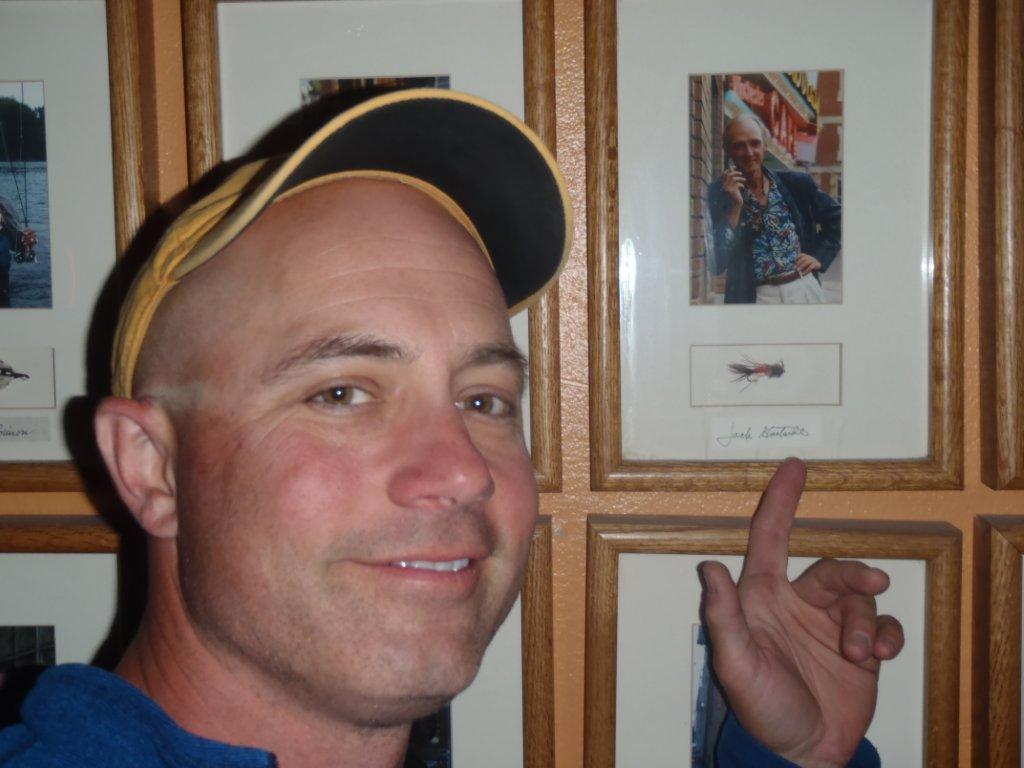
On October 9th the Catskill Fly Fishing Museum inducted Jack into its Fly Fishing’s Hall of Fame. Other inductees were John Randolph, Louis Rhead, and Art Lee.

Bummer to say that between traffic and weather the drive from Boston to Roscoe, NY took longer than I allowed for. I missed most of the actual induction ceremony. But I got there for the cookies and apple cider, with time to mingle and tour the museum. There was a dinner afterwords where Bob Popovics presented Ted Patlen with the Poul Jorgensen Golden Hook Award. Before presenting the award Bob voiced a few of his fond memories of Jack, including the story of how Jack got him into his first tarpon. Hearing the warmth in Bob’s voice as he spoke about the old days in the Keys, Vaca Cut, and the old Golden Grouper…it was one of the high points of the evening.

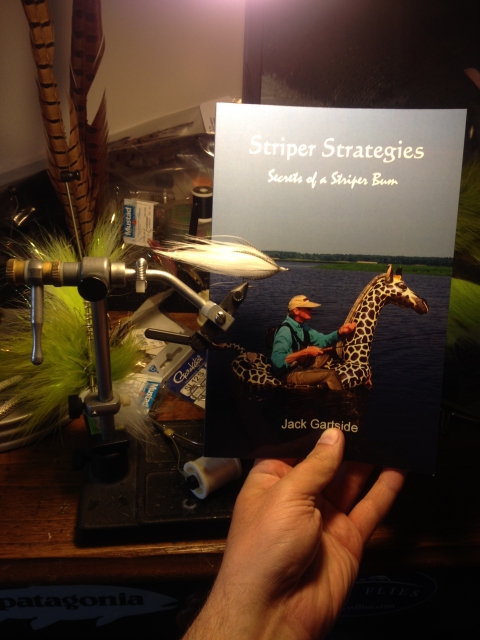
The museum is really interesting, packed with items of lore and tributes to fishers of legend. If you’re ever in the Roscoe vicinity (about 90 miles northwest of New York City) it’s well worth a visit. Jack’s friend Mel Harris once observed, “There were two things Jack was proud of…his flies and his lifestyle.” The museum’s exhibit does a fine job of showing both. It includes three of Jack’s self-published books: Scratching the Surface, Flies for the 21st Century, and Striper Strategies. There are fly boxes too, crowded with Gartside Gurglers, Soft Hackle Streamers, BeastMasters, Corsair Minnows, Sparrow Nymphs, and Gartside Pheasant Hoppers. There’s a Red Sox hat, a Christmas gift to Jack a few years ago to replace one he wore for years until it fell apart.

From Jack’s family of friends, a big thank you to Jim Krul and the rest of the museum staff for allowing us the privilege of seeing our friend honored in this way.

Here are a few pictures. Click them to enlarge.


Welcome to Roccus Writing, Jack Gartside’s blog: a place for tales, tips, and other random musings.